


 Cart
Cart
 sales@molnova.com


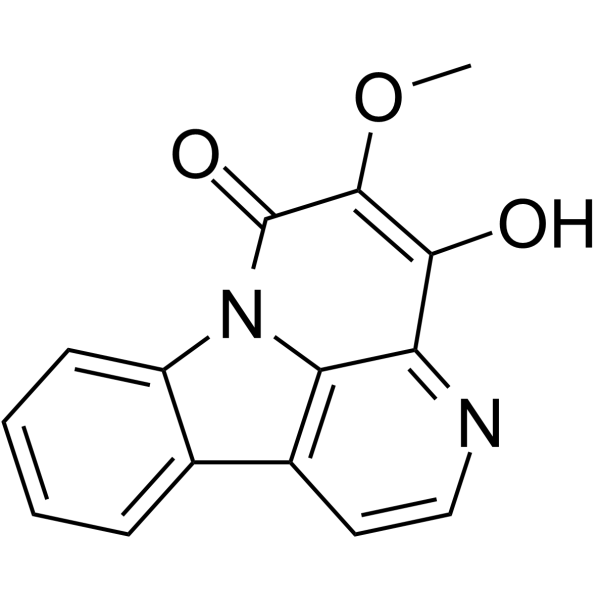
Picrasidine Q
CAS No. 101219-61-8
Picrasidine Q( —— )
Catalog No. M31232 CAS No. 101219-61-8
Picrasidine Q has the capacity of anti-cell transformation and anti-cancer, it might be a chemopreventive and chemotherapeutic agent by direct targeting FGFR2 and inhibiting cell proliferation of ESCC cells.
Purity : >98% (HPLC)
 COA
Datasheet
HNMR
HPLC
MSDS
Handing Instructions
COA
Datasheet
HNMR
HPLC
MSDS
Handing Instructions
| Size | Price / USD | Stock | Quantity |
| 10MG | 380 | In Stock |


|
| 50MG | Get Quote | In Stock |
|
| 100MG | Get Quote | In Stock |
|
Biological Information
-
Product NamePicrasidine Q
-
NoteResearch use only, not for human use.
-
Brief DescriptionPicrasidine Q has the capacity of anti-cell transformation and anti-cancer, it might be a chemopreventive and chemotherapeutic agent by direct targeting FGFR2 and inhibiting cell proliferation of ESCC cells.
-
DescriptionPicrasidine Q has the capacity of anti-cell transformation and anti-cancer, it might be a chemopreventive and chemotherapeutic agent by direct targeting FGFR2 and inhibiting cell proliferation of ESCC cells.
-
In VitroPicrasidine Q (0~60 μM; 3 hours; ESCC cells) suppresses downstream signaling of FGFR2 in ESCC cells.Picrasidine Q (0~60 μM; 48 and 72 hours; ESCC cells) induces cell cycle arrest and apoptosis.Picrasidine Q (0~60 μM; 24~72 hours; ESCC cells) suppresses the growth of ESCC cells.Picrasidine Q (0~60 μM; 30 minutes; JB6Cl41 cells) inhibits proliferation by inhibition of G1/S cell cycle transition.Picrasidine Q (12.5, 25 or 50 μM) can inhibit the FGFR2 kinase activity in a dose-dependent manner. Western Blot Analysis Cell Line:ESCC cells Concentration:0~60 μM Incubation Time:3 hours Result:Suppressed downstream signaling of FGFR2 in ESCC cells.Apoptosis Analysis Cell Line:ESCC cells Concentration:0~60 μM Incubation Time:48 and 72 hours Result:Induced cell cycle arrest and apoptosis.Cell Cytotoxicity Assay Cell Line:ESCC cells Concentration:0~60 μM Incubation Time:24~72 hours Result:Suppressed the growth of ESCC cells.Cell Cycle Analysis Cell Line:JB6Cl41 cells Concentration:0~60 μM Incubation Time:30 minutes Result:Inhibited proliferation by inhibition of G1/S cell cycle transition.
-
In Vivo——
-
Synonyms——
-
PathwayOthers
-
TargetOther Targets
-
Recptor——
-
Research Area——
-
Indication——
Chemical Information
-
CAS Number101219-61-8
-
Formula Weight266.3
-
Molecular FormulaC15H10N2O3
-
Purity>98% (HPLC)
-
Solubility——
-
SMILES——
-
Chemical Name——
Shipping & Storage Information
-
Storage(-20℃)
-
ShippingWith Ice Pack
-
Stability≥ 2 years
Reference



-
G-1749
G-1749 does not alter the monomer-dimer equilibrium of IRE, stimulates the RNase activity of unphosphorylated IRE1 and inhibits IRE1-3P, and significantly increases the RNase activity of IRE1-KR-0P.
-
Murine CMV pp 89 (16...
IE1 peptide refers to an antigenic peptide encoded by the immediate early (IE) gene of mouse cytomegalovirus (mCMV). IE1 peptide is one of the key antigenic peptides expressed during mCMV infection, plays a role in transcriptional activation in the life cycle of mCMV, and is one of the earliest genes expressed in the viral replication cycle. IE1 peptide is an important target for CD8+ T cell response and can be used to study the host immune response to mCMV infection.
-
Inotodiol
Inotodiol is an included triterpenoid with a significant effect of anti-tumor.
